For years I wrote to a market.
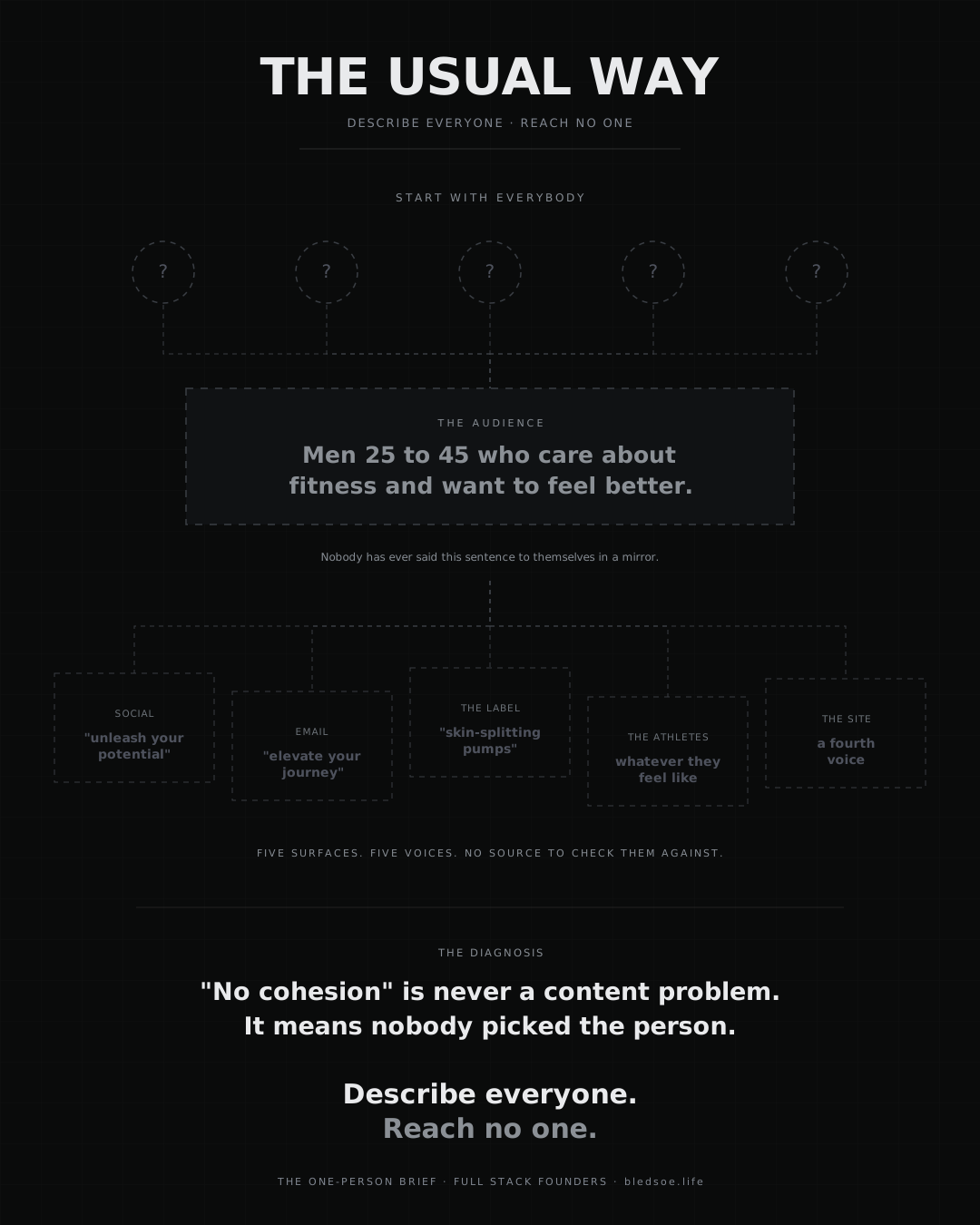
Men, twenty-five to forty-five. Into fitness. Wanted to look better and feel better. I could recite it in my sleep, and every piece of copy I built on it came out clean, accurate, and completely dead.
Nothing in the description was wrong. That was the confusing part. It just never did anything to anyone, including me.
You have a sentence like that. Most businesses do. It sits at the top of the brand document, everybody nods at it, and nobody has ever felt a thing because of it.
Then a mentor of mine, Eben Pagan, gave me an instruction that sounded like a waste of an afternoon.
Pick one.
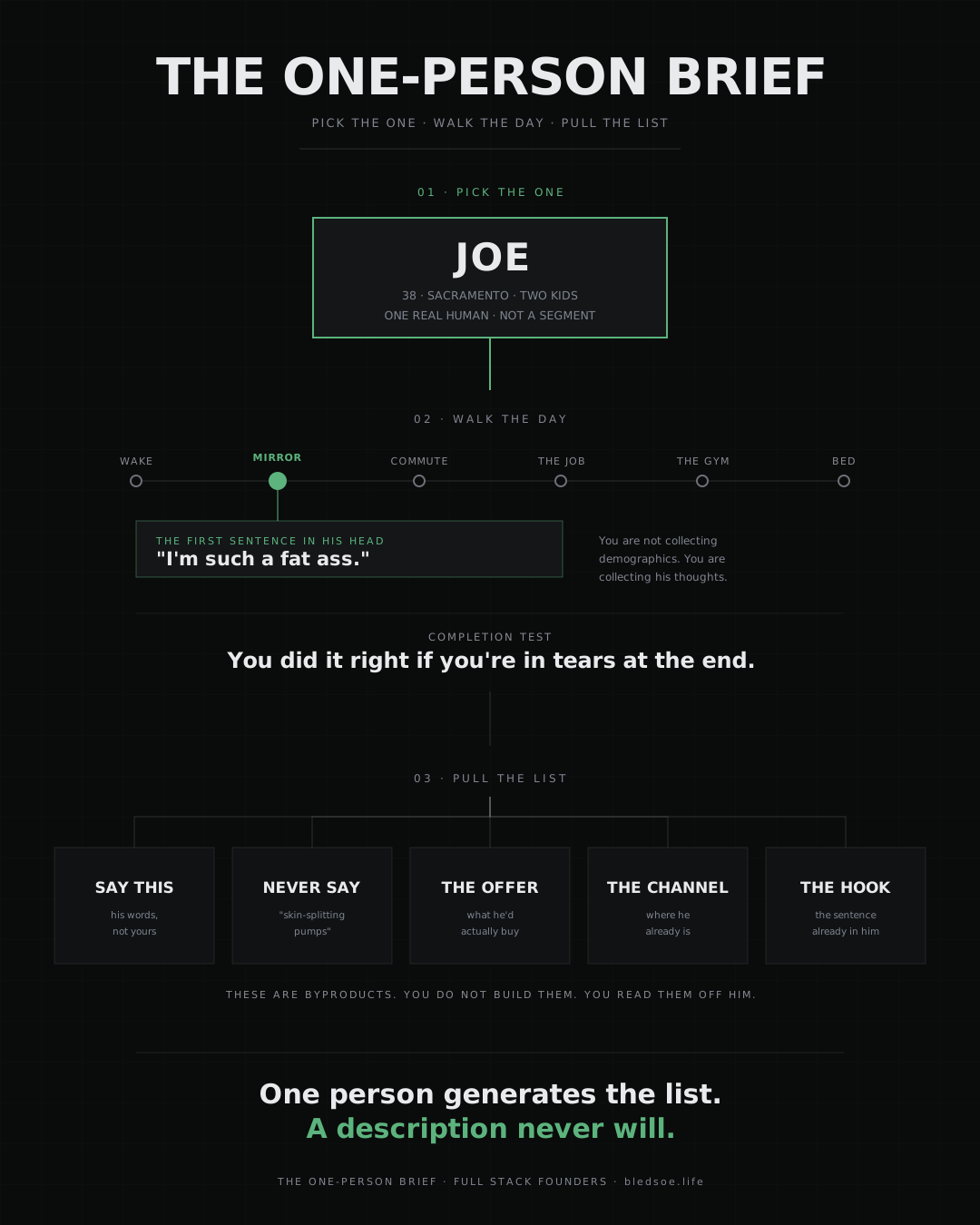
Not a segment. Not a persona document. One human being. And use somebody real, he said. The best client you ever had, the one you'd clone if you could.
I knew who it was immediately. His name was Joe. Two kids, a commute, a job he didn't love.
Then came the part that actually does the work. Walk his entire day, from the second his eyes open to the second he falls asleep. Not what he does. What he thinks.
He wakes up groggy. He walks to the bathroom, turns on the sink, looks at himself in the mirror, and the first sentence in his head is "I'm such a fat ass."
That is the first thing anyone says to him all day, and he says it to himself. Then he gets in the car. He goes to a job he doesn't like. The best hour of his entire day is the hour he's in the gym, and then it ends, and he drives home.
I was crying by the end of it. Sitting alone at a desk, in tears, over a man who by then was mostly a memory.
That's how I knew I'd done it right. I've used it as the test ever since. Get to the end of somebody's day dry-eyed and you didn't find them. You wrote a profile. Go back in.
Here's the part I didn't expect.
The arguing stopped.
I'd spent months in a low-grade argument with myself about tone. Were we the tough brand or the encouraging one. Was that word ours. Did that line sound like us. Every new piece of copy reopened the whole thing from the beginning.
It went quiet in a single afternoon, because none of it was a question about the brand anymore. It was a question about him.
Unleash your potential. You cannot say that to a man standing in front of that mirror at six in the morning. He has been sold his potential his entire life. It's part of what he's looking at.
That's the whole editorial standard. One question, asked of one person, settling arguments I'd been having with myself for a year.
The say-this-never-say-that document I'd been failing to write for months fell out of Joe in one sitting. And it fell out consistent, because every line of it came off the same man.
Then I built a product for him. It did over a hundred thousand dollars a month for four years.
I never wrote to a market again.
I'm telling you this now, years later, because the machine made it urgent.
Hand any AI your audience description and watch what it does. It will not push back. It will take "men twenty-five to forty-five who care about fitness" and hand you a complete brand in ninety seconds. Positioning, voice, the tone guide, twelve tagline options. It will look like work got done. And it will read like every other brand in your category, because a generic input can only produce a generic output, and the model has no way of knowing you handed it a placeholder.
This is the thing people keep getting wrong about owning your tools. The skill does not rescue you from vague thinking. It industrializes it. You can now manufacture undifferentiated brand faster than at any point in human history, and all of it will be spelled correctly.
The one move here that cannot be automated is going and getting the person. That is an afternoon of your life and a willingness to sit inside somebody's actual interior. No model can do it for you, because the material isn't in the model. It's in your memory of a real human being you actually served.
There's a serious argument against everything I've just said, and it deserves an answer.
The best research on how brands actually grow says close to the opposite. It says reach beats targeting. That you win by being mentally available to as many category buyers as possible, and that narrow targeting leaves money on the table. I don't think that research is wrong.
I think it's answering a different question.
Reach is a media question. Who you are writing to is a message question. Ferriss didn't publish The 4-Hour Workweek to two people. He published it to everybody and wrote it to two, by name, as though he were sending them email. It reached every entrepreneur on the planet.
Broad distribution. Narrow address.
The mistake was never reaching wide. The mistake is writing wide. A message built for everyone has to survive contact with everyone, so it gets sanded down until there is nothing left in it that could exclude, offend, or land. Nobody has ever forwarded a demographic.
And I don't think the reason most people skip this is that it's difficult. It takes an afternoon.
A description is comfortable.
"Men twenty-five to forty-five" keeps everybody in the room. Nobody gets excluded. Nothing gets lost. You haven't committed to anyone, which means you cannot be wrong about anyone, and you never have to feel the specific fear of building something that one particular person might not want.
A description is how you avoid choosing.
Once I saw it there, I started seeing it everywhere else in the business. The offer I wouldn't narrow. The client I wouldn't fire. The price I wouldn't raise. Every one of them was the same move, which is to keep the option open, stay unfalsifiable, and protect myself from the loss that comes with picking. The audience description was just the version of it I had written down and hung on the wall.
Picking one person is a loss. You are deliberately writing past most of the people who could theoretically buy from you, and it feels reckless right up until it starts working.
So if your brand feels scattered right now, if the social account says one thing and the emails say another and the site says a third, I'd stop treating it as a content problem. It almost never is. It means nobody ever picked the person.
Go pick him. Walk his whole day. Listen for the sentence in his head at six in the morning.
Then write to him, and let everybody else overhear it.
Now read your own business the way you just read this one. Run the Check >_
Or get the writing, once a week.
New essays on ownership and the AI shift.